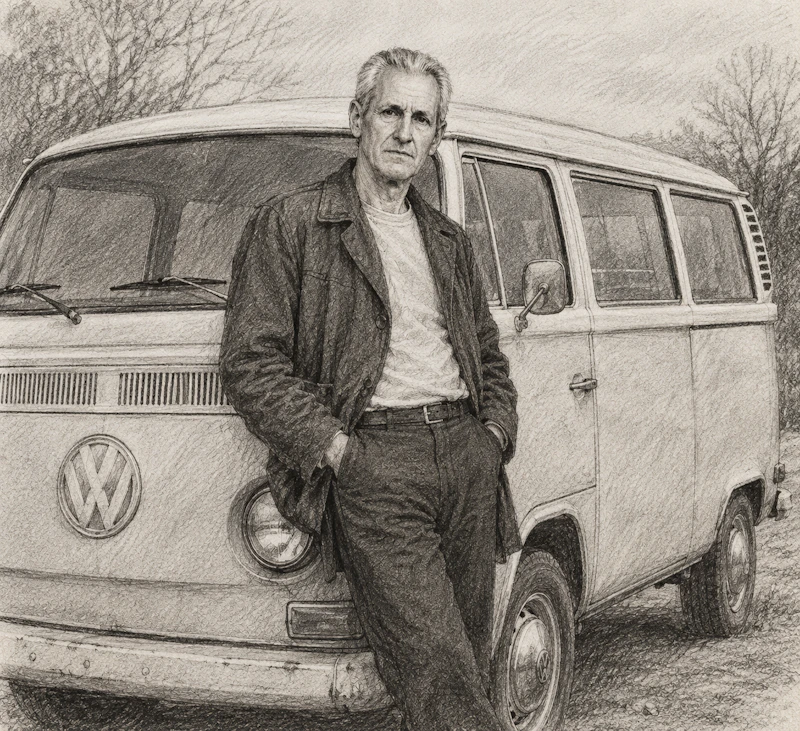
Dr. Jack Kevorkian, "Dr. Death," was a pathologist and a pioneer of access to aid in dying. He shared a controversial ideology for years, but became most known during the 1990s.
Early history
He was born in 1928 in Pontiac, Michigan, to Armenian immigrants from the Ottoman Empire (now Turkey).
His parents took him to an Orthodox church weekly, but from a young age he questioned the existence of God. He had difficulty understanding why God would allow the Armenian genocide that affected his extended family, and by the time he was 12 years old, he had stopped attending church.
Kevorkian graduated from medical school in 1952, and later specialized in pathology.
During an internship at the Detroit Henry Ford Hospital, he was affected by a terminally ill patient, which sparked interest in euthanasia.
A deadly offer
In the 1980s, he published articles through the German journal Medicine and Law that shared his perspective on the ethics of euthanasia.
In 1987, he advertised himself as a physician consultant for death counseling. Kevorkian performed his first assisted suicide in 1990 for a 54-year-old woman (Janet Adkins) who was diagnosed with Alzheimer's disease.
This was done in the back of his van with a device he invented called the "Thanatron." The Thanatron (meaning death machine) would deliver lethal medication via IV after patients initiated it with a button or switch.
He also invented the "Mercitron" - a gas mask that fed carbon monoxide to patients. Shortly after its first known use, his license was suspended by the state of Michigan in 1991. Because lethal drugs became harder to obtain for the Thanatron, the Mercitron became his primary device. The state of California suspended his medical license in 1993 and revoked it in 1994.
Kevorkian's lawyer (Geoffrey Fieger) claimed that Kevorkian assisted in 130 deaths from 1990-1998. In these cases, the patients took the action themselves to end their lives, according to Kevorkian. He assisted by setting up and attaching the devices.
A bigger statement
In 1998, Dr. Kevorkian apparently decided it was time to make a bigger statement. 130 assisted suicides weren't enough, and it was time to euthanize a client himself.
He gave 60 Minutes a videotape of him euthanizing 52-year-old Thomas Youk, who had Lou Gehrig's disease (ALS). This time Kevorkian administered the lethal injection on his own with consent from Mr. Youk.
In the 60 Minutes interview, he says, "I've got to force them to act; they must charge me."2 He wanted to make the legal process move forward on the topic of euthanasia.
This case with Mr. Youk led to Kevorkian finally being convicted of second-degree murder. He was sentenced to 10-25 years in prison, but was released on parole after only 8 years. He had been charged multiple times beforehand, but none led to conviction until now.
Judge Jessica Cooper, who sentenced Dr. Kevorkian, said, "you must always stay within the limits provided by the law. You may not break the law."
Were all of his patients terminally ill?
No, many of his clients were likely very poor candidates for this. In 1997, a Detroit Free Press report was released on 47 people who were linked to dying under Dr. Kevorkian's assistance. The report shared that 60% of these patients weren't terminal, 17 could have lived indefinitely, 13 of them hadn't complained about pain, and 19 died within 24 hours of the first meeting.
Another source had even worse findings. The New England Journal of Medicine examined 69 people who died under Kevorkian's assistance and found that a whopping 75% weren't terminally ill (according to autopsy findings). In fairness, almost all had physical health problems (96%), and 72% had a recent decline in health status.3
But the reality that so many of these patients weren't reported to have a terminal illness is insane. How could a doctor get this far?
It reminds me of Oregon's 2025 data that shows only 37% of their MAID patients reported inadequate pain control, or concern about it.4 Yes, these patients would require a terminal illness, but many receive MAID without reported pain concerns.
In the 2025 Oregon report, the top three concerns are losing autonomy (89%), less able to engage in activities making life enjoyable (89%), and loss of dignity (65%).
Kevorkian's impact
Dr. Jack Kevorkian died on June 3rd, 2011, from a thrombosis. He was staying in a Michigan hospital for pneumonia and kidney problems, and was reported to have passed peacefully.
I find it sad that he spent so much of his life fighting for access to more death. He was an ambitious man with immigrant parents, and he chose to pioneer in the movement of end-of-life choices. And this came at a cost.
It cost the lives of those he assisted in ending, and I believe it sparked more acceptance from a number of people.
"We can do better than kill people ... when they're near the end of life," said Dr. Mark Siegler in the 60 Minutes interview. "We can do better with end-of-life care."
Our doctors should be better than to push a life-ending solution. Doctors should be standing behind actual treatment and care that benefits their patients.
The future of end-of-life care
I believe our future is on a trajectory to advance euthanasia and physician-assisted suicide. The United States has added MAID access to 3 states within only the last couple of years (at the time of writing).6 The Netherlands has already exceeded 1,000 cases of aid in dying being used for psychiatric patients.5
"The future is there... looking back at us. Trying to make sense of the fiction we will have become."
I understand that many people believe this is reasonable care for suffering patients, but the truth is that it's gone too far. Personally, I feel this solution can never be justified.
I hope more doctors will stand up against the status quo. I hope more healthcare professionals will be willing to take an opposite approach to that of Dr. Kevorkian. I want more individuals to recognize the issues with MAID and to stand for better methods of care.
As a Christian, I hope for people to recognize the true mercy found in Christ Jesus. We all have a purpose in life, and I find the solution of MAID to be in conflict with true care.
That's my personal belief, but I hope you see the value in it. Consider which path you can back up. One promotes life, and the other promotes death in the guise of compassion.
EDITOR'S NOTE:
I tried to make the data in this article factual, using research and AI accuracy checks. If you find anything to be inaccurate, feel free to use the contact page on StopMAID.com to notify me.