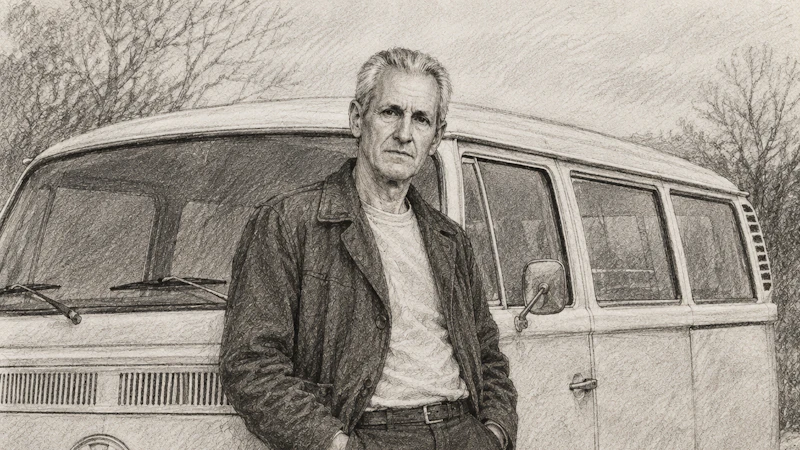
This may be an atypical article for the kind you would normally read regarding medical aid in dying. This article shares a short, fictional story of a man looking into MAID and then facing an eye-opening experience.
It doesn't really matter what relation you do or do not have to MAID at this time. You may disagree with what I say. I simply want to share a little story, my viewpoint, and some encouragement.
As a disclaimer, the story is specifically about a man who explores MAID in the country of Canada. The U.S. has stricter guidelines, but I hope you can still find the story a good example.
The illness
Say that a man named Jim is dealing with Parkinson's disease. This is generally a chronic condition that may take a couple of decades to progress to its advanced stages.
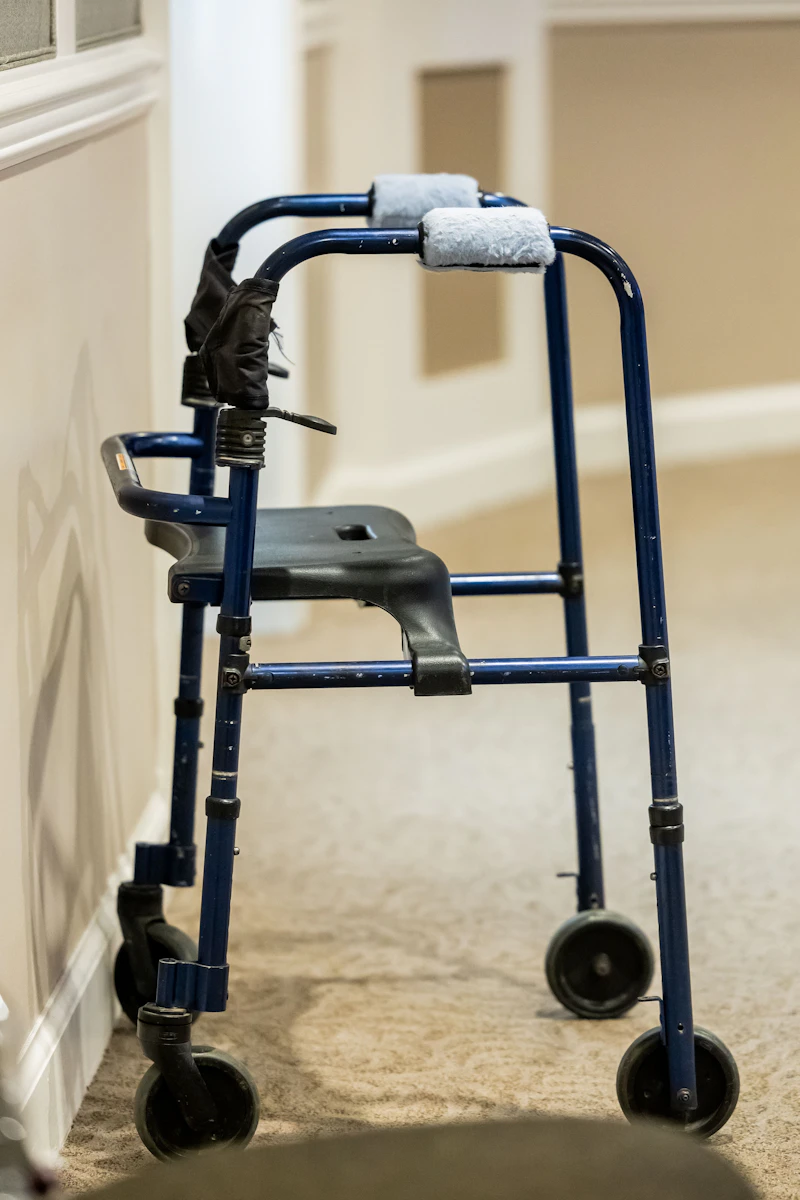
A decade after being diagnosed with the chronic disease, Jim has recently progressed to stage 4 of 5. At this point he uses a walker, and frequently needs assistance with certain tasks. For the most part, he has done fine to this point, but now more questions are pinging his attention. How much longer can I live like this? Will it get any better? My finances are already taking a toll, and it's only becoming harder to keep things up.
At this point, the struggle has established itself in multiple areas. Physical ability, finances, mental acuity, quality of living, and autonomy.
What now?
A close friend comes to visit, and Jim starts discussing what's been going on. He saw in the news someone describing their choice of MAID due to a similar situation. Jim brings this up in conversation. At first, his friend gets uncomfortable at the idea and hesitates. As he describes his situation more, his friend slowly starts accepting the idea that this could be really helpful to him.
A couple of weeks later, Jim begins steps to move forward with medical aid in dying. He lives in Quebec, and the eligibility process is moving along.
Exiting the scenario
I want to exit this scenario now and just consider what is going on. A terminally ill person (yet who likely has several years of life ahead of him) has gone from managing well overall to moving forward with medical aid in dying. This all can happen within a relatively short amount of time.
So what happened exactly? His condition has advanced, but so did an impending doom feeling with his outlook on reality. His teetering hope turned to a solution that puts him in control of the situation.
That might sound compassionate to you, but is Jim still here right now? Did any of his friends or family encourage him about his value in life? His grandkids always loved seeing him, even if it was only a few times per year. Where is Jim now? Did MAID save his life?
What I'm getting at
Here's the deal. Society has told Jim that MAID is compassionate and dignified, mercy killing. It's something to end the suffering and give you control again. But is Jim still here?
This is not a treatment; this is a flawed solution. I understand that this is a general example, and there are people who suffer great, chronic pain. I know it's not easy.
I'm not a doctor, and I'm very thankful to have them. There are many good doctors in the world. However, when a doctor prescribes or administers lethal medication, I believe there has been a compromise.
This goes beyond Grandpa Jim in my example. What about his grandkids? Does this leave a legacy that they can be proud of? Did Grandpa make a dignified choice when he chose to discard life? How many people are affected each year because of this message? I don't know, but I can't say it does much to promote life.
A plot twist
Let's re-enter the scenario, if you will, and take it in a different direction. Jim was going through the eligibility criteria and was approved. The appointment was set.
One day at a grocery store, Jim found himself picking up a man's groceries that had just fallen from his wheelchair. When he started to hand them over, he saw who it was. It was his brother whom he hadn't seen in over 60 years! The last time he saw Ray was after a big fight. They hadn't spoken since.
Jim noticed something. His brother was crippled. One arm was missing, both legs were gone, and his neck was permanently tilted heavily to one side. Ray told him that he'd been in an accident. Despite all of this, his brother looked happy.
It turned out that Jim and Ray's friendship was rekindled that day after seeing each other in the grocery store. But something else happened as well. Ray spoke to his brother of the hope he had, and the reason he has for living. Later, Jim thought deeply about his grandkids, his brother, and even his relationship with Christ.
Despite the difficulties and the circumstances ahead that he may need to battle, Jim decided to cancel his appointment for receiving MAID and finish his race strong. He had a new outlook on life, and saw purpose in it.
What I want people to understand
For one thing, an ailment does not define someone. I know that there are difficulties that arise, and some situations can be very challenging. Despite these things, the value of life is not something to take lightly.
Palliative and hospice care aren't perfect options, but neither is a solution that kills. It's a line between supporting death and supporting life.
Whatever you, a relative, or a friend may experience, life is too valuable to allow for a solution as flawed as medical aid in dying.
I want you to know that life is such a valuable gift. We can't compare it to euthanizing dogs in suffering. Humans are different. We have a soul.
I genuinely hope the best for your life, and I'll admit I don't have all the answers. I may not truly understand what you, or your loved one is going through.
However, humans have value and a purpose. I believe that life is a gift from God. A question I'm going to leave you with is this: Could you be satisfied with choosing MAID if you knew you still had a purpose on Earth?